India's
premier resume service
India's
premier resume service


- Aquaculture Stewardship Council (ASC) Certification, Completed , January 2014
- Home

- Resume Samples
- Fisheries Resume Sample
What's your job?
Fisheries Resume Samples and Templates for 2026
- Table of Contents
- Downloadable Sample
- Resume Tips from Experts
- Resume Text Version
- Share


Master the Art of Creating an Impressive Fisheries Resume for India’s Marine and Aquaculture Sector
A strong fisheries resume is essential for professionals seeking careers in India’s thriving marine and aquaculture industry. Whether you’re targeting roles in fish farming, marine research, seafood processing, fisheries management, or conservation, your resume must effectively showcase your technical knowledge, practical skills, and commitment to sustainable aquatic resource management.
India has the world’s second-largest aquaculture industry and an extensive coastline spanning 8,118 km, offering tremendous opportunities in fisheries. From the Central Marine Fisheries Research Institute (CMFRI) to private aquaculture giants like Apex Frozen Foods and Avanti Feeds, and from fishing cooperatives in Kerala to shrimp hatcheries in Andhra Pradesh, your resume must demonstrate both academic credentials and hands-on expertise in this specialised field.
This comprehensive guide will help you craft a resume that effectively showcases your skills and experience in fisheries, aquaculture, and marine science, while tailoring it to India’s unique industry requirements.
Section 1: Understanding Fisheries Roles in India
What Do Fisheries Professionals Do?
Fisheries professionals work across the entire spectrum of aquatic resource management—from fish cultivation and harvesting to processing, research, and conservation. Their work supports food security, sustainable fishing practices, and the livelihoods of millions of fishing communities.
Core Responsibilities:
- Aquaculture Management: Operating fish farms, hatcheries, and grow-out facilities
- Fish Stock Assessment: Monitoring fish populations and ecosystem health
- Processing Operations: Managing seafood processing, quality control, and export compliance
- Research & Development: Developing new aquaculture techniques and species cultivation
- Conservation: Protecting marine ecosystems and enforcing fishing regulations
- Extension Services: Training fishermen in modern techniques and sustainable practices
- Policy & Regulation: Developing and implementing fisheries policies
- Quality Assurance: Ensuring food safety standards and export certifications
Types of Fisheries Roles in India
- Aquaculture Technician/Manager: Managing fish and shrimp farms
- Fisheries Officer: Government roles in fisheries departments
- Marine Biologist: Research on marine ecosystems and species
- Seafood Processing Manager: Managing processing plants and quality
- Hatchery Manager: Operating fish and shrimp hatcheries
- Fish Health Specialist: Disease management and biosecurity
- Fisheries Extension Officer: Training and capacity building
- Quality Control Analyst: Food safety and export compliance
Key Employers in India
- Government Bodies: Department of Fisheries, CMFRI, CIFE, State Fisheries Departments, MPEDA
- Aquaculture Companies: Avanti Feeds, Apex Frozen Foods, Waterbase Ltd, Nekkanti Sea Foods
- Seafood Exporters: Devi Sea Foods, Liberty Group, Sandhya Aqua, Falcon Marine
- Research Institutes: ICAR-CIFA, ICAR-CIFE, ICAR-CMFRI, FSI, NFDB
- Hatcheries: Coastal Aqua, CP Aquaculture, Thai Union Group (India operations)
- NGOs: WWF-India, Wildlife Trust of India, BNHS (marine programmes)
- Private Farms: Shrimp farms in Andhra Pradesh, carp farms in West Bengal, cage culture in Kerala
- Cooperatives: Matsyafed (Kerala), FISHCOPFED, State fishing cooperatives
Section 2: Preparing to Write Your Fisheries Resume
Gathering Essential Information
Before writing your resume, compile:
- Work experience: Farms, research institutes, processing units worked at
- Technical skills: Species cultured, equipment operated, techniques mastered
- Quantified achievements: Production volumes, survival rates, export values
- Education: Degrees in fisheries, marine biology, aquaculture
- Certifications: HACCP, ISO 22000, aquaculture-specific training
- Research: Publications, projects, grants received
- Field experience: Species handled, ecosystems studied, regions worked in
Understanding What Employers Seek
Indian fisheries employers look for:
- Strong foundation in aquaculture and marine biology principles
- Hands-on experience with fish/shrimp culture and management
- Knowledge of water quality management and disease control
- Understanding of food safety and export regulations
- Familiarity with sustainable fishing practices
- Field work capability and willingness to work in remote locations
- Data collection and analysis abilities
- Communication skills for extension and training activities
Indian Fisheries Context
Highlight your understanding of:
- MPEDA export regulations and certification requirements
- CAA (Coastal Aquaculture Authority) guidelines
- State fisheries policies and licensing requirements
- Marine fishing regulations and mesh size restrictions
- Shrimp farming practices (Litopenaeus vannamei, Penaeus monodon)
- Freshwater aquaculture (carp polyculture, pangasius)
- Brackishwater aquaculture in coastal states
- Traditional fishing methods and community-based management
Section 3: Choosing the Right Resume Format
Chronological Format
Best for fisheries professionals with progressive experience in the industry. Shows career growth from technician to management roles.
Functional Format
Suitable for fresh graduates or those transitioning from related fields like agriculture or biology. Emphasises skills and education.
Combination Format
Ideal for experienced professionals who want to highlight both research credentials and practical experience.
Recommended Format by Experience Level
| Experience Level | Recommended Format | Resume Length |
|---|---|---|
| Entry-Level (0-2 years) | Functional/Chronological | 1 page |
| Experienced (3-7 years) | Chronological | 1-2 pages |
| Senior/Research | Combination | 2 pages |
Section 4: Writing a Compelling Professional Summary
Your summary should capture your experience, specialisation, and key achievements in 2-3 sentences.
Aquaculture Manager Summary
Experienced aquaculture professional with 8 years of expertise managing shrimp and fish farms in Andhra Pradesh. Achieved average survival rates of 85%+ and production of 8 tonnes/hectare in Litopenaeus vannamei culture. MSc Fisheries with HACCP certification and strong knowledge of export-oriented aquaculture practices.
Fisheries Research Scientist Summary
Dedicated marine researcher with 6 years of experience at CMFRI Kochi studying pelagic fisheries and stock assessment. Published 12 papers in peer-reviewed journals on sardine and mackerel fisheries of Kerala coast. PhD in Marine Biology with expertise in fish biology, population dynamics, and ecosystem modelling.
Seafood Processing Manager Summary
Quality-focused seafood processing professional with 7 years of experience managing EU-approved seafood processing facilities in Gujarat. Expert in HACCP, ISO 22000, and BRC standards with track record of 100% export compliance. Led processing operations handling 5,000 MT annually with zero rejections.
Entry-Level Fisheries Professional Summary
Motivated fisheries graduate with BFSc from CIFE Mumbai and 6-month internship experience in shrimp hatchery operations. Strong foundation in aquaculture, fish nutrition, and disease management. Eager to contribute to sustainable aquaculture development and apply practical skills in commercial operations.
Fisheries Extension Officer Summary
Community-focused fisheries extension professional with 5 years of experience training coastal fishing communities in Maharashtra. Successfully implemented 15+ capacity-building programmes reaching 2,000+ fishermen. MSc Fisheries Extension with strong communication skills in Marathi and Konkani.
Section 5: Showcasing Your Fisheries Experience
Aquaculture Manager Experience Example
Senior Farm Manager Avanti Feeds Ltd, Nellore | April 2019 – Present
- Manage 50-hectare intensive shrimp farm with annual production of 400 MT L. vannamei
- Achieve consistent survival rates of 82-88% and FCR of 1.3-1.4 across production cycles
- Implement biosecurity protocols reducing disease incidence by 60% compared to industry average
- Supervise team of 25 farm workers including feeding, water quality, and harvest operations
- Coordinate with MPEDA for farm registration and export certification requirements
- Optimise feed management reducing costs by 15% while maintaining growth performance
- Implement water quality monitoring using IoT sensors for real-time parameter tracking
- Train new staff on Standard Operating Procedures and emergency response protocols
Farm Supervisor Coastal Aquaculture, Bhimavaram | June 2016 – March 2019
- Supervised daily operations of 30-hectare shrimp farm with 15-member team
- Monitored water quality parameters (DO, pH, ammonia, alkalinity) twice daily
- Managed feeding schedules and adjusted rations based on check tray observations
- Coordinated harvest operations ensuring minimal stress and quality maintenance
- Maintained production records and submitted reports to management
- Achieved 90% survival in nursery phase through improved management practices
Fisheries Research Experience Example
Scientist ICAR-Central Marine Fisheries Research Institute, Kochi | August 2018 – Present
- Conduct stock assessment studies on oil sardine and Indian mackerel in Kerala waters
- Lead fishery-independent surveys using R/V CADALMIN collecting 5,000+ samples annually
- Develop length-based and age-based population models for sustainable harvest guidelines
- Publish research findings in journals like Indian Journal of Fisheries and Marine Fisheries Information Service
- Train M.F.Sc students in fish biology techniques and statistical analysis
- Collaborate with state fisheries departments on policy recommendations
- Present findings at national conferences and stakeholder workshops
- Secured ₹45 lakh research grant from DBT for marine biodiversity study
Seafood Processing Manager Experience Example
Quality Assurance Manager Devi Sea Foods Ltd, Visakhapatnam | July 2017 – Present
- Manage quality assurance for EU-approved seafood processing facility handling 8,000 MT annually
- Ensure compliance with HACCP, ISO 22000, BRC, and USFDA requirements
- Lead team of 15 QC technicians conducting microbiological and chemical testing
- Achieved zero export rejections over 5-year period maintaining 100% compliance record
- Implement traceability systems from farm to export ensuring recall readiness
- Conduct internal audits and prepare for third-party certification audits
- Train processing floor staff on GMP, hygiene, and safety protocols
- Coordinate with MPEDA and EIC for pre-shipment inspection clearances
Hatchery Manager Experience Example
Hatchery Manager CP Aquaculture (India) Pvt Ltd, Chennai | September 2016 – Present
- Manage SPF (Specific Pathogen Free) L. vannamei broodstock and hatchery operations
- Oversee production of 500 million PLs annually with average survival of 65%
- Maintain biosecurity protocols achieving SPF status certification
- Manage live feed production (algae, Artemia) for larval nutrition
- Implement water treatment and recirculation systems
- Coordinate with grow-out farms for PL quality feedback and improvement
- Train technicians in larval rearing, disease identification, and treatment
- Ensure compliance with CAA guidelines and seed certification requirements
Section 6: Essential Skills for Fisheries Resumes
Technical/Hard Skills
- Aquaculture Operations: Pond preparation, stocking, feeding, harvesting
- Water Quality Management: Testing, aeration, treatment, monitoring
- Disease Management: Diagnosis, treatment, biosecurity protocols
- Species Culture: Shrimp, carp, tilapia, seabass, catfish, ornamental fish
- Hatchery Operations: Broodstock management, spawning, larval rearing
- Processing Skills: HACCP, GMP, quality testing, value addition
- Research Methods: Sampling, data collection, statistical analysis
- Equipment Operation: Aerators, feeders, water quality meters, lab equipment
Soft Skills
- Problem-Solving: Addressing production challenges and emergencies
- Leadership: Managing farm workers and technicians
- Communication: Training fishermen and presenting research
- Attention to Detail: Quality control and record keeping
- Physical Stamina: Field work in challenging environments
- Adaptability: Working with seasonal variations and market changes
- Teamwork: Coordinating across departments and stakeholders
- Time Management: Managing production cycles and deadlines
Domain Knowledge
- Indian fisheries regulations and policies
- Export certification requirements (MPEDA, EIC)
- CAA guidelines for coastal aquaculture
- Fish nutrition and feed formulation
- Marine and freshwater ecosystem dynamics
- Fishing gear and harvest methods
- Post-harvest handling and cold chain management
- Sustainable aquaculture practices
Section 7: Education and Certifications
Educational Qualifications
Bachelor’s Level:
- BFSc (Bachelor of Fisheries Science) from CIFE, state agricultural universities
- BSc Zoology/Marine Biology with fisheries specialisation
Master’s Level:
- MFSc (Master of Fisheries Science) - Aquaculture, Fish Processing, Fisheries Biology
- MSc Marine Biology/Oceanography
- M.Tech in Fish Processing Technology
Doctoral Level:
- PhD in Fisheries Science, Marine Biology, Aquaculture
Key Institutions:
- ICAR-CIFE Mumbai, ICAR-CIFA Bhubaneswar, ICAR-CMFRI Kochi
- State Fisheries Universities (Tamil Nadu, Kerala, Karnataka, Andhra Pradesh)
- Cochin University of Science and Technology
Valuable Certifications
| Certification | Issuing Body | Benefit |
|---|---|---|
| HACCP Certification | Approved bodies | Essential for processing roles |
| ISO 22000 Lead Auditor | IRCA/Exemplar | Food safety management |
| BRC Food Safety | BRC Global Standards | Export facility compliance |
| Aquaculture Technician Certificate | NFDB/State departments | Skill certification |
| MPEDA Registered Aquaculture Technician | MPEDA | Export-oriented farms |
| PADI/SSI Dive Certification | PADI/SSI | Marine research diving |
| GIS & Remote Sensing | ISRO/Universities | Resource mapping |
| Fish Health Management | CIBA/CIFE | Disease diagnosis |
Training Programmes
- NFDB Training: Aquaculture, fish processing, ornamental fish culture
- MPEDA Programmes: Export-oriented aquaculture, processing technology
- KVK Training: Extension programmes for fish farmers
- CIFA/CIFE Short Courses: Specialised training in various aspects
- International: FAO training, WorldFish programmes, AIT Thailand
Section 8: Tips for Different Experience Levels
Entry-Level Fisheries Professionals (0-2 years)
- Highlight education credentials and academic projects
- Include internship and fieldwork experience
- Emphasise practical skills gained during training
- Mention relevant coursework and dissertation topics
- Include species you’ve worked with
- List laboratory and field techniques learned
- Show willingness for remote postings
- Keep resume to one page with clean formatting
Experienced Fisheries Professionals (3-7 years)
- Lead with quantified achievements (production, survival rates)
- Highlight management and supervisory experience
- Include specific species and culture systems expertise
- Mention certifications and compliance knowledge
- Showcase problem-solving examples (disease outbreaks handled)
- Include training programmes conducted
- List publications or conference presentations
- Demonstrate industry network and stakeholder relationships
Senior Fisheries Professionals (8+ years)
- Emphasise leadership and strategic contributions
- Highlight policy input and industry influence
- Include large-scale project management
- Showcase expertise across multiple systems/species
- Mention awards, recognition, and invited talks
- Include consulting and advisory experience
- Demonstrate innovation and technology adoption
- List professional memberships and committee roles
Section 9: ATS Optimisation for Fisheries Resumes
Keywords to Include
Job Title Keywords:
- Fisheries Officer, Aquaculture Manager
- Marine Biologist, Fisheries Scientist
- Hatchery Manager, Farm Manager
- Seafood Processing Manager, Quality Manager
Technical Keywords:
- Aquaculture, fish farming, shrimp culture
- Water quality management, disease management
- HACCP, ISO 22000, food safety
- Stock assessment, population dynamics
- L. vannamei, carp culture, tilapia
Skill Keywords:
- Fish biology, marine biology
- Biosecurity, disease diagnosis
- Export compliance, MPEDA
- Extension, capacity building
Species/System Keywords:
- Litopenaeus vannamei, Penaeus monodon
- Catla, Rohu, Mrigal (carp species)
- Cage culture, pond culture, RAS
- Brackishwater, marine, freshwater
ATS Best Practices
- Use simple formatting without graphics or complex tables
- Include exact job title keywords from the posting
- List technical skills and certifications clearly
- Use standard section headings (Experience, Education, Skills)
- Include scientific names of species where relevant
- Spell out abbreviations (HACCP, MPEDA, CAA)
- Save resume in .docx or .pdf format as requested
- Include quantified achievements (tonnes, survival %, hectares)
Conclusion
India’s fisheries and aquaculture sector offers diverse career opportunities across research, production, processing, and conservation. Whether you’re managing shrimp farms in Andhra Pradesh, conducting marine research at CMFRI, processing seafood for export in Gujarat, or training fishing communities in Kerala, your resume must demonstrate both technical expertise and practical capability.
Your fisheries resume should showcase quantified achievements—production volumes, survival rates, export compliance records—alongside relevant education and certifications. In this specialised field, hands-on experience with specific species and culture systems is highly valued alongside academic credentials.
Focus on demonstrating your understanding of both traditional practices and modern aquaculture technologies. Include experience with biosecurity, disease management, and quality assurance—critical concerns for commercial operations. Show your ability to work in challenging field conditions and your commitment to sustainable resource management.
Use this guide to create a resume that opens doors to opportunities across India’s expanding fisheries sector—from government research institutes to private aquaculture companies and seafood exporters. A well-crafted fisheries resume demonstrates your dedication to this vital industry that supports millions of livelihoods and contributes to India’s food security.
Pro Tip: Leverage ShriResume’s AI Resume Builder to create a professional fisheries resume that highlights your aquaculture expertise, research credentials, and production achievements to impress employers across India’s marine and aquaculture sector.
Frequently Asked Questions
What sections should a strong fisheries resume include?
At minimum, include contact information, a professional summary, work experience, key skills, and education. Depending on your experience level, you may also add certifications, achievements, projects, or industry-specific sections that highlight your expertise.
How do I write a professional summary for a fisheries role?
Keep it concise — two to three sentences highlighting your experience level, core competencies, and a key achievement or strength that shows why you're right for the job. Tailor it to match the specific role you're applying for.
What skills are most important to list on a fisheries resume?
Include a mix of technical skills specific to fisheries roles and soft skills like communication, problem-solving, and teamwork. Research job postings in your target companies to identify the most commonly requested skills.
How detailed should my work experience be?
Use bullet points to describe your roles, focusing on specific results, tools used, and the impact you made. Quantify achievements where possible — numbers and percentages help recruiters quickly understand your contributions.
Do I need certifications on my fisheries resume?
Certifications aren't always required, but they can strengthen your application — especially if they demonstrate advanced training or specialised expertise. List the certification name, issuing organisation, and year obtained.
What's the best resume format for a fisheries?
Most fisheries professionals benefit from a reverse-chronological format that lists your most recent experience first. If you're changing careers or have gaps, a functional or combination format might work better.
How long should my fisheries resume be?
Aim for one page if you're early in your career. Experienced professionals with extensive achievements can use two pages — just ensure every section adds value and remains relevant to the role.
Should I tailor my resume for each job application?
Yes. Customising your resume with keywords and responsibilities from the job posting improves your chances of passing Applicant Tracking Systems (ATS) and resonating with recruiters. Focus on relevant experience and skills for each role.
Fisheries Text-Only Resume Templates and Samples
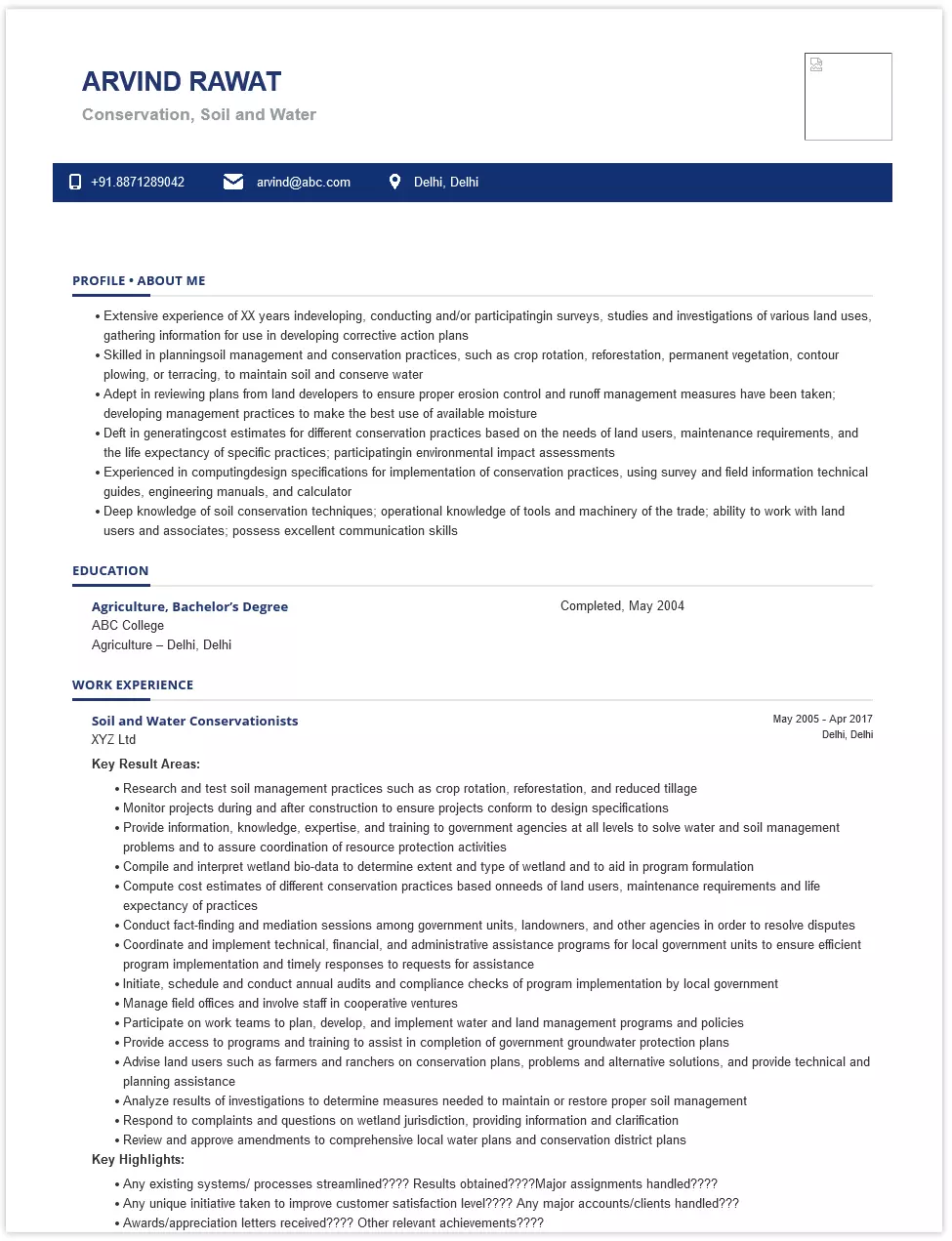
ARVIND RAWAT
Phone: 0000000
Email: arvind@abc.com
Address: C-21, Sector-21, Delhi
About Me
Fisheries
- An Accomplished Fisheries Professional skilled in providing specialist advice and support to internal and external clients on a range of fisheries, and aquaculture including, knowledge generation and sharing, policy development advice, fish commodity value addition, complex operations formulation, training, and marine and inland water-bodies ecosystem resilience building
- Extensive experience of XX years in undertaking investigative surveys of water quality and the health, spawning, and movement of fish; policing waterways to check for unlawful fishing; liaising with the planning departments of local authorities about the location of new buildings, etc.
- Knowledge of the marine environment and environmental issues; understanding of laws and regulations relating to catching fish and shellfish; good data collection and report writing skills; gathering, recording, and analyzing information relating to the fishing industry
- Adept in catching, measuring, examining, and releasing fish and assessing their health; preparing evidence and statements for prosecution cases; making improvements to habitats through work on streams and river banks
- Highly experienced in delivering fishery-related observations and monitoring services; knowledge of various fishery species and government regulations related to fisheries; immense knowledge of biological sampling, environmental monitoring, and commercial fisheries practices
- Familiarity with firefighting, sea survival, and first aid treatment procedures; ability to fish related species identification books and keys, efficiently; ability to operate computer and sampling instruments, in a proper manner
Education
Marine Science, Bachelor’s Degree, Completed, August 2003
Teerthanker Mahaveer University (TMU)
– Marks null
Moradabad, UP
Certifications
Work Experience
Period: April 2015 - Current
Business Head Fisheries
Shodh Consulting Hiring For Top Fish Trading Company
Mumbai, MH
- Observe and estimate fishery catch composition and disposition, properly
- Examine and document intake of protected fish species and fishery discards
- Conduct and coordinate biological sampling and environmental monitoring activities
- Check and ensure compliance of fishing activities with established fishery regulations
- Gather and analyze all data on costs related to fishing operations
- Obtain and maintain accurate information related to vessel and equipment performance
- Measure and calculate amounts and species composition of fish caught, discarded, and retained
- Utilize effective biological sampling techniques and collected various fish samples from fishery catch
- Collect, review, and maintain data pertaining to fishing gear and equipment
- Watch and monitor all fishing operations, onboard commercial fishing vesselsPrepare, maintain, and retrieve work-related records, using computer
- Track and maintain a stock level of all needed equipment and supplies
- Serve as the Bank focal point to deliver clear and concise advice on fisheries, aquaculture, and blue economy issues to regional member countries
- Provide adequate expertise in the agribusiness environment related to fish commodity value chain development
- Network with other fisheries personnel, researchers, professionals, and advocacy groups to preserve and monitor fish habitats and stocks
- Prepare reports and presentations for internal and external stakeholders, policy-makers, commercial interests, and the public.
- Prepare effective communication strategies to build strong working relationships with regional hubs, key government departments, and other partner agencies
Period: May 2007 - April 2014
Fishery Observer
Khushi Fisheries
Noida, UP
- Assisted in the breeding and rearing of marine species in hatcheries, including creating incubation plans, taking inventories of fish eggs, and cleaning and maintaining incubation units
- Collected biological data from various fish species, for example, length, weight, sex, and age
- Collected and analyze stomach contents for diet and nutrition studies and tissues for contaminants
- Diagnose, recommend, and administer appropriate treatments for sick fish, including identifying common parasites
- Established daily growth rates and rearing temperature regimes to meet production targets
- Selected fish suitable for release to specific lakes, rivers, or ponds
- Carried out survey of lakes, rivers, ponds, and marshes to identify fish species, insects, and flora using various sampling techniques and equipment
- Monitored fish populations using a variety of equipment, for example, nets and electro-fishers
- Tracked fish using telemetry on land, water, and in the air
- Operated and maintained equipment such as boats, nets, and water chemistry meters.
- Contributed to the development of education programs and public information campaigns for hatcheries and fisheries management
- Maintained records of production, breeding, and treatment programs
Skills
- Fish Species
- Data Collection
- Data Entry
- Biological Data
- GPS
- Clips
- Gill Nets
- Fish Habitat
- Water Quality Data
- Access Database
- Fish Identification
- Population Estimates
- General Maintenance
- Species Identification
- Fish Health
- Aquatic Vegetation
- Scale Samples
- Aquatic Habitats
Languages
Softwares
Operating System
Personal Interests
- Fishing
- Yoga
- Sketching
Author
Kshama Sharma - Resume, CV and Cover Letter Writing Expert